Photographer Nitin Rai — Delhi
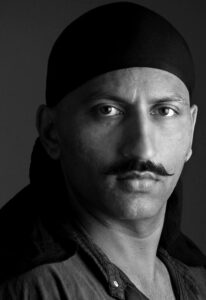 Nitin Rai is one of the most accomplished and widely recognised photographers working in Delhi today. Based in Gurugram, Delhi NCR, he has spent over 35 years building a professional photography career that spans corporate, documentary, fashion, and fine art photography — earning recognition at the highest national and international levels.
He is the son of Raghu Rai, widely considered the greatest Indian documentary photographer of the twentieth century and a longtime Magnum Photos associate. Rather than relying on that legacy, Nitin has built his own distinguished career through the quality and consistency of his work. His photograph appeared on the cover of TIME Magazine in 1992. In 1993, he received the Nikon International Award — one of the most prestigious honours in professional photography.
Today, Nitin Rai is regarded as the Best photographer in Delhi by the corporations, publications, and institutions that have trusted his work over decades. He is also the founder of the Raghu Rai Center for Photography, which carries forward a serious tradition of photographic practice through education and mentorship.
Why Nitin Rai Is the Best Photographer in Delhi
When people search for the Best photographer in Delhi, they are usually looking for someone they can trust with work that matters. Not someone who bought an expensive camera last year. Not someone whose Instagram looks good. Someone with a real record — clients who came back, publications that printed the work, awards that mean something. Nitin Rai is that photographer. He has been working professionally in Delhi for over 35 years, and the evidence of his standing is not self-declared. It is documented.
Who Is Nitin Rai?
Nitin Rai is a professional photographer based in Gurugram, Delhi NCR. He works across commercial, corporate, documentary, architectural, fashion, and fine art photography. His clients include some of India’s largest and most demanding organisations — Aditya Birla Group, DLF, NTPC, Emaar MGF, Ansal API, and MGF among them. These are not clients who hire carelessly. They are organisations with communications standards that are audited, reported on, and published internationally. The fact that they have trusted Nitin Rai repeatedly says something concrete about the quality of his work.
Nitin is the son of Raghu Rai — widely regarded as the greatest Indian documentary photographer of the twentieth century, a Magnum Photos associate, and the man whose images of the Bhopal disaster, Mother Teresa, and Indira Gandhi defined how India was seen by the world for decades. That is a significant lineage. But Nitin has not coasted on it. He has built his own career, his own client list, his own reputation — independently and over a long time.
In 1992, one of Nitin’s photographs appeared on the cover of TIME Magazine. This is not a minor distinction. TIME’s picture editors receive thousands of images every week. The cover is chosen from the best of those thousands. Having a photograph selected for the cover of TIME in 1992 is a factual measure of quality that no amount of local marketing can manufacture. A year later, in 1993, Nitin received the Nikon International Award — one of the most respected honours in professional photography, given to photographers who demonstrate sustained excellence at an international level.
He is also the founder of the Raghu Rai Center for Photography in Delhi, which carries forward a tradition of serious photographic practice through education and mentorship.
What Makes Someone the Best Photographer in Delhi?
Delhi has thousands of photographers. The phrase best photographer in Delhi appears on hundreds of websites. It is easy to claim and difficult to verify — unless you know what to look for.
The first thing to look for is longevity. A photographer who has been working professionally for 35 years has navigated changes in technology, shifts in client expectations, the transition from film to digital, and the evolution of every genre they work in. They have not just survived those changes — they have remained in demand through them. That is a meaningful filter. Most photographers who start working do not still have a serious client base 35 years later. Nitin Rai does.
The second thing to look for is the calibre of clients. Any photographer can claim corporate clients. Very few can claim Aditya Birla Group, DLF, and NTPC — organisations whose photography requirements are demanding, whose budgets are not wasted on average work, and whose communications are scrutinised publicly. When these organisations choose a photographer, they choose carefully. The fact that they have chosen Nitin Rai, and returned to him, is a meaningful indicator.
The third thing is international publication. Editorial photography is assessed by editors who have no relationship with the photographer and no reason to publish work that does not meet their standards. When Nitin’s photographs appeared in TIME, Der Spiegel, Stern, Figaro, Tatler, The Sunday Telegraph, and The Independent, they were selected on merit alone. These publications are based in New York, Hamburg, Munich, Paris, London — cities with their own strong photography cultures. Being published there, repeatedly, from a base in Delhi, is a genuine measure of where Nitin’s work stands internationally.
Top Photographer in Delhi — A Reputation Earned Over Decades
The phrase Top Photographer in Delhi is used loosely. It appears in directories, on agency websites, in self-published bios. Nitin Rai’s claim to it is not based on self-description. It is based on a career that has produced a TIME Magazine cover, a Nikon International Award, repeat commissions from India’s largest corporations, and publication in the world’s most demanding editorial outlets.
That record was not built quickly. It was built over 35 years of consistent work. There are photographers in Delhi who are talented and who produce good images. There are very few who have operated at this level for this long. That consistency — not a single great image, not one successful year, but decades of deliverable work — is what puts Nitin Rai in a different category from most photographers operating in the Delhi market today.
Publications and Recognition
Nitin Rai’s photographs have been published in TIME Magazine, Der Spiegel, Stern, Figaro, Tatler, The Sunday Telegraph, and The Independent. Each of these publications maintains editorial standards that are set externally, applied rigorously, and not negotiable. A photographer whose work appears in these outlets has been assessed by some of the most experienced picture editors in the world and found to meet the mark.
He has also authored two coffee table books — India 24 Hours and Lakshadweep — long-form photographic projects that require a commitment and a depth of vision that goes well beyond commercial assignment work. These books are evidence of a photographer who takes the medium seriously, not just professionally but as a sustained creative and documentary practice.
The Nikon International Award, received in 1993, recognised Nitin’s work at a point when he had already been working professionally for several years. It was not a career-launch prize. It was recognition of a standard already established.
Nitin Rai and Raghu Rai — Photography as Inheritance and Independence
Growing up around Raghu Rai gave Nitin an education in photography that is simply not available to most people. Raghu Rai’s photographs — of India, of its political life, its industrial disasters, its spiritual landscape — are held in international collections and have been exhibited globally. His work with Magnum Photos placed him in the company of the twentieth century’s most important documentary photographers.
What Nitin absorbed from that environment was not just technical knowledge. It was a way of seeing — careful, considered, patient, committed to the moment that actually says something rather than the moment that merely looks impressive. That foundation is visible in Nitin’s work across every genre he practices. Images that are composed rather than grabbed. Light that is worked with rather than corrected in post-processing. A consistency that comes from discipline, not luck.
And yet Nitin’s career is his own. The clients, the awards, the publications — none of these came from the Raghu Rai name. They came from work that stood up on its own terms in front of editors and commissioners who assessed it independently. That independence, within a photographic tradition, is one of the things that makes Nitin Rai’s position in Delhi photography genuinely distinctive.
Son of Raghu Rai — A Photographic Legacy
Growing up around Raghu Rai gave Nitin an early education in photography that very few people in Delhi — or anywhere in India — have had access to. Raghu Rai’s photographs of India are held in museum collections internationally. His work with Magnum Photos, his coverage of Bhopal, his portraits of Mother Teresa and Indira Gandhi — these are among the defining documentary photographs of the twentieth century.
Nitin absorbed that tradition early. He learned to see before he learned to shoot. The result is a body of work that has its own distinct identity — technically disciplined, compositionally considered, and editorially credible — while drawing on a photographic lineage that no other Delhi photographer can claim.
As the founder of the Raghu Rai Center for Photography, Nitin has also committed to ensuring that this tradition continues beyond his own practice. It is one reason why his reputation in Delhi is not just professional but foundational — built on something deeper than a portfolio.
International Recognition From a Delhi Base
What distinguishes Nitin Rai from other Photographers operating in Delhi is the consistency with which his work has met international editorial standards. A TIME Magazine cover is not a local award. It is one of the most widely seen editorial images in the world in any given week. The fact that Nitin’s photograph was selected for that cover in 1992 reflects a quality of work that transcends the Delhi market entirely.
His photographs have also been published in Der Spiegel, Stern, Figaro, Tatler, The Sunday Telegraph, and The Independent — each of which has its own experienced picture desk applying rigorous editorial criteria. For clients in Delhi commissioning photography for purposes that extend beyond India — international investor communications, global brand campaigns, publications with international distribution — Nitin Rai is the photographer whose work holds up in those contexts.
He has also authored two published coffee table books — India 24 Hours and Lakshadweep — long-form photographic projects that reflect the depth and range of his practice beyond commercial assignments.
Contact Nitin Rai
Nitin Rai Photography is based in Gurugram, Delhi NCR. He accepts assignments across Delhi and throughout India.
Phone: +91-9811075464
Email: nitinrai@nitinrai.com
Website: www.nitinrai.com